
Project Managers:
Up2green, in collaboration with Ishpingo and Fundacion Impulso Verde
Project Overview:
This initiative unfolds in a critical biodiversity hotspot in the south of Mérida, Yucatán, increasingly threatened by demographic growth. Traditional agricultural practices are shifting towards migratory and unregulated methods, resulting in soil degradation and accelerating deforestation.
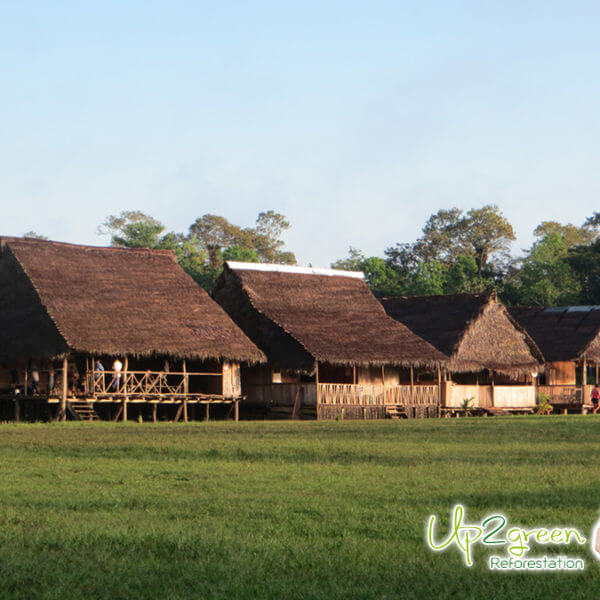
In this scenario, establishing agroforestry crops offers an appealing alternative to the increasingly prevalent monocultures in rural communities. Within the specific context of the Fray Martin community, located about an hour from Iquitos, families primarily subsist on the sale of charcoal and the cultivation of cassava and bananas. This practice has led to nutritional deficiencies and involves land clearing through slash-and-burn techniques, where forests are burned to clear space for these crops. This issue recurs across villages near city ports, where low transportation costs facilitate quick gains from charcoal sales, and the absence of regulatory interventions prevents the transition to more sustainable agricultural systems.
Objectives:
- Improve the living conditions of the communities;
- Train the local population in sustainable agricultural practices and better management of natural resources;
- Provide human and technical support to the communities;
- Combat deforestation, primarily caused by charcoal production, which serves as a significant income source for the local population;
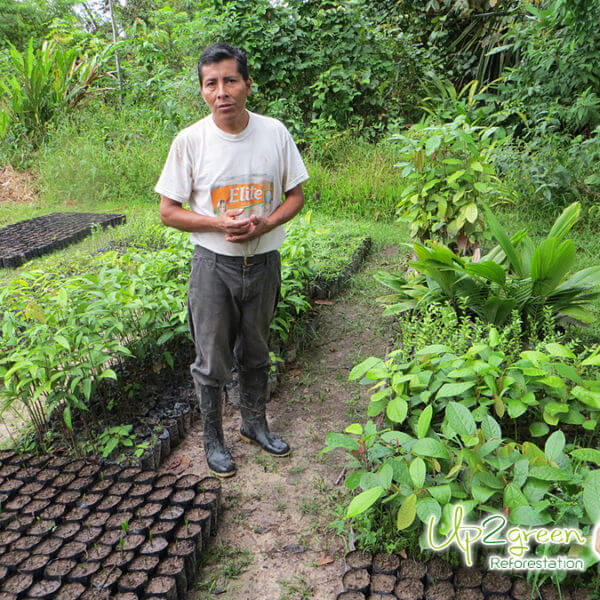
- Preserve environmental health and local biodiversity by promoting valuable species;
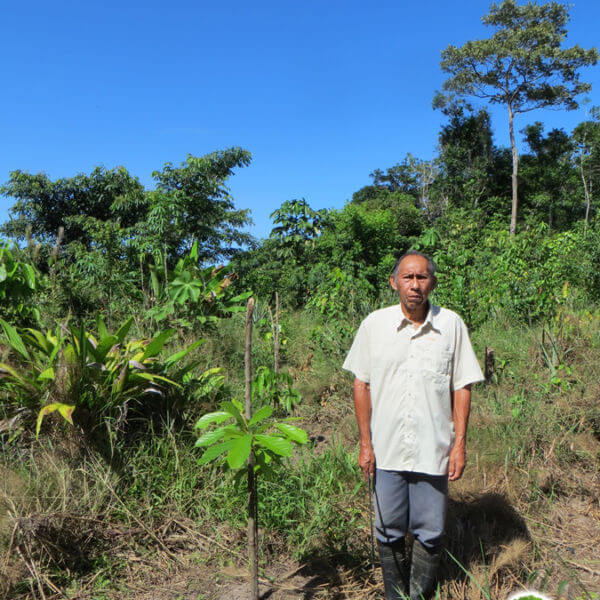
- Plant at least 30,000 trees over three years.
The current agricultural model not only fails to provide a balanced diet but also contributes to the depletion of young trees, hindering forest regeneration. Moreover, forest burning for land clearing leaves little organic material in the soil, rendering it barren over time. This unsustainable approach forces communities to continuously seek new land, resulting in the loss of forest cover and biodiversity. The area and its residents thus require substantial financial and human support to shift towards sustainable agricultural practices. The project aims to develop less labour-intensive and environmentally sustainable activities, create financially viable alternatives to charcoal sales, and diversify dietary options.
Beneficiaries:
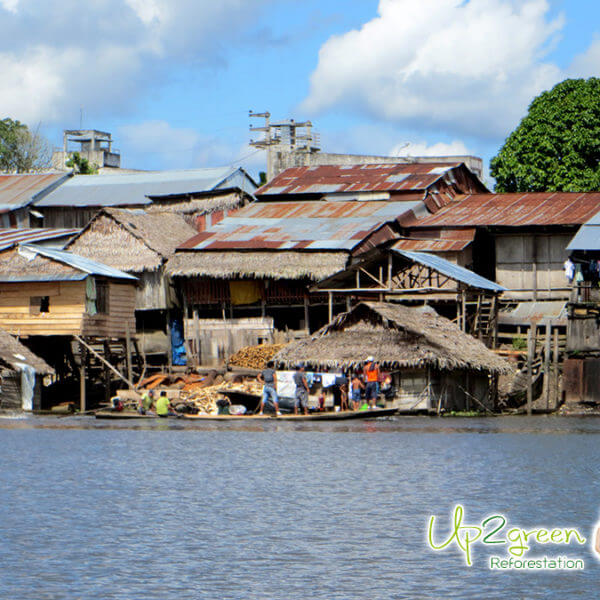
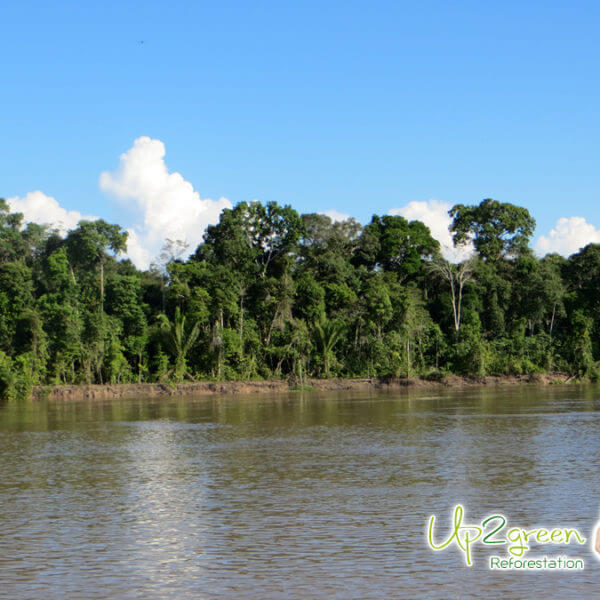
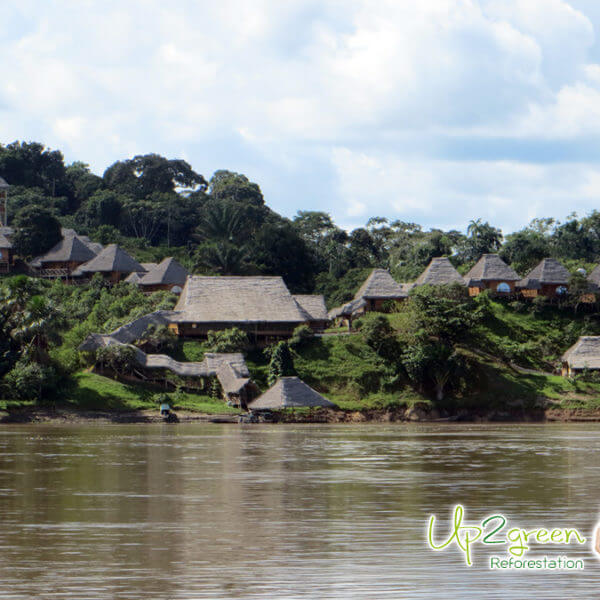
The primary beneficiaries are the residents of Fray Martin, Santa Rita, San Jose de Lupuna, and San Pedro, all situated along the Rio Nanay near the Amazon. Descendants of indigenous populations or migrant farmers, the residents primarily engage in cassava cultivation and fishing. Their main source of income comes from charcoal sales, which devastates the forests. The project promotes the planting of fruit and timber trees to replace charcoal production with more varied output from new plantations.