
Project Manager:
Location:
Mixteca Region, State of Oaxaca, Mexico
Start of the Project:
2016
Achievements to Date:
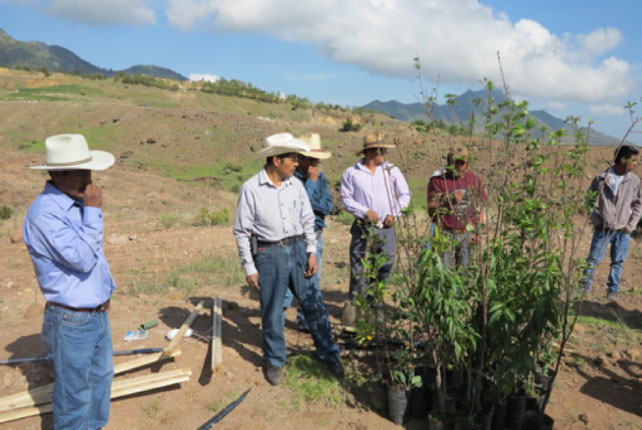
Over 50,000 trees planted, benefitting hundreds of farmers
Projections:
30,000 trees by 2022
Objectives:
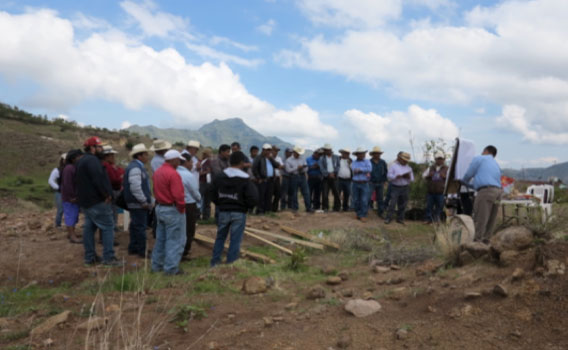
- Train and raise awareness among populations on sustainable agricultural practices for soil preservation;
- Provide communities with human and technical support;
- Diversify agricultural production and diet of local populations;
- Reduce soil erosion, especially in this mountainous region, by planting native species;
- Improve rainwater retention as trees serve as cover.
Project Overview:
In Oaxaca’s Mixteca region, almost 95% of the soils are moderately to severely eroded. The primary causes of soil and forest degradation cover include:
- Expansion of goat farming;
- Overexploitation of forest resources (timber);
- Discontinuation of traditional pre-Hispanic terraced farming methods.
Most of the territory lacks vegetation, which exacerbates the region’s water scarcity and increases surface runoff during heavy rains, leading to significant soil erosion. These runoff carves create deep gullies that erode the earth thereby carrying away the soil’s fertile elements. Tree planting is vital in these areas, as it helps anchor the soil with roots and enriches it by introducing organic matter from the decomposing leaves and branches. Selecting native species enhances the sustainability of the plantations, and cultivating fruit trees offers additional economic benefits and dietary options for the farmers.
Main Species Planted:
- Plum, Prunus domestica
- Oaxacan Pine, Pinus Oaxacana
- Peach, Prunus persica
- Pear, Pyrus communis
- Apple, Malus domestica
- Mexican Oak, Quercus mexicana sp.
Beneficiaries:
Indigenous rural communities living in extreme poverty in the Mixteca region of Oaxaca. More than 500 families have already participated in this initiative.